Home · Cold Atmospheric Plasma

Cold Atmospheric Plasma · Adelaide

Cold atmospheric plasma in Adelaide. You've finally found it.

If you've been searching for cold atmospheric plasma in Adelaide and finding nothing, I know exactly why. As of 2026 I'm the only practitioner offering CAP on the Fusion Plasma device in this city.

And I know why you were searching. Skin that flares no matter what you do. Steroid creams that work until they don't. Being told to manage it, live with it, come back in six months.

CAP is a completely different approach. No heat, no needles, no medication, no downtime, and a body of research behind it worth your time.

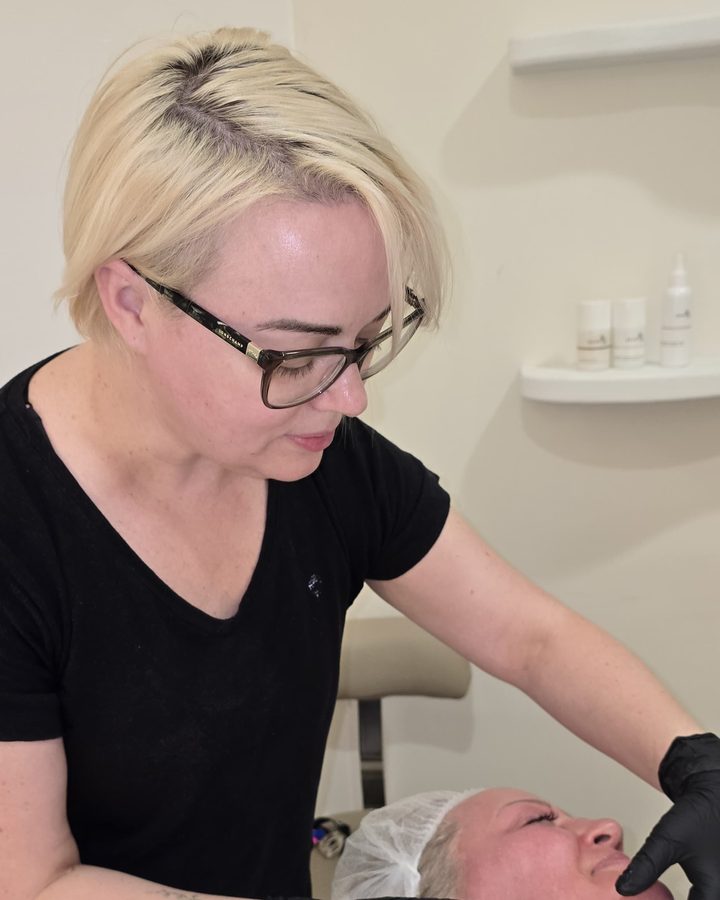
Cold atmospheric plasma treatment being carried out by Jo Clayton at her Adelaide studio

What cold atmospheric plasma is, in plain English

An energised gas, cooler than a warm bath, doing something no cream can.

Plasma is the fourth state of matter. Cold atmospheric plasma is that energy delivered at close to room temperature. Your skin sits at around 37 to 38°C during treatment, which is roughly your own body heat.

What actually reaches your skin is a stream of reactive oxygen and nitrogen species. In the research these do three things at once: they calm the inflammatory signalling that drives flares, they clear bacteria on the skin surface, and they switch on the skin's own repair processes.

That combination is why one treatment is being studied across conditions that look unrelated: eczema, acne, rosacea, psoriasis, slow-healing wounds. They're all, underneath, problems of inflammation and repair.

And let me be blunt about this, because it confuses everyone: this is not plasma fibroblast. That treatment, Fusion Plasma skin tightening, uses a hot arc, crusts your skin and needs five days of hiding. There's a full downtime breakdown for it. CAP does none of that. Same word, entirely different thing.

What cold atmospheric plasma research has actually found

Not "studies suggest". Here are the real numbers from published human research, and what they mean for someone sitting where you are.

Eczema & atopic dermatitis

22 people · 3 sessions of 5 min · over 2 weeks

34%drop in SCORAD severity scores by week 4
35%drop in EASI scores

Itch scores fell by around a quarter. Staph aureus, the bacteria that colonises eczema-prone skin and drives the flare cycle, was significantly reduced. No burns, no pain, no lingering redness reported in any participant.

Prospective comparative clinical pilot study, Scientific Reports, 2021

Acne

37 people · 8–10 sessions · 3 min per side · split-face trial

48%fewer inflammatory lesions by the 4-week follow-up
79%rated their treated side visibly improved, against 52% untreated

It didn't stop when the treatment did. Lesions were down 30% by the final session, then kept falling after treatment finished: 43% at two weeks, 48% at four. The untreated side showed no significant reduction at all, in the same people, over the same weeks.

Each person had one side of their face treated and the other left alone, so they were their own comparison. You can't put a result like that down to good skincare or a good month. And 80.5% of all pain ratings across the study were zero.

Karrer et al., prospective randomised controlled split-face clinical trial, Applied Sciences, 2021

Rosacea

90 seconds daily · 6–12 weeks

↓ Rednessmeasured area of erythema significantly decreased
↓ Lesionsinflammatory lesions significantly reduced

Quality-of-life scores improved significantly too, and for rosacea that may be the number that matters most. The daily toll of it is rarely proportional to how it looks to anyone else.

Cited in scoping review of CAP in inflammatory and infectious dermatology

Psoriasis

2 applications of 30 seconds · days 0 and 3

14 daysto complete clearing of the treated plaque
6 → 0itch score, out of 10

This plaque had resisted vitamin D derivatives, corticosteroids and salicylic acid for years. Redness, thickness and scale reduced steadily until the plaque had gone. This was one detailed case report, not a large trial. One person, one plaque. But it's the kind of result that explains why the research is moving so fast.

Case report, Clinical Plasma Medicine / PMC, 2020

Radiation dermatitis

120 seconds daily during radiotherapy

↓ Painpain, itching and burning all significantly reduced

Skin toxicity was significantly improved, along with swelling and pigmentation. For anyone going through radiotherapy and dreading what it does to their skin, this is one of the more moving findings in the literature.

Cited in scoping review, human study

Fungal nail infection

3 sessions weekly · 10–20 min · over 6 months

53.8%achieved clinical cure
100%tolerated the treatment

Just over half cleared clinically, and every single participant tolerated it. For a condition where the usual alternatives are months of oral antifungals with liver monitoring, that tolerability figure matters.

Cited in scoping review, human study

The pattern worth noticing

The reviewers who pulled all this together concluded that CAP performs more impressively for inflammatory skin conditions than infectious ones. Eczema, rosacea, psoriasis, acne. The flaring, itching, angry-skin category. If that's what you've been living with, that's the category the evidence is strongest in.

And across every study that reported on safety, significant adverse events were rare, with participants describing it as more comfortable and better tolerated than what they'd had before.
Why this is different from what you've tried

Most of what's offered for inflamed skin either suppresses it or strips it.

CAP doesn't suppress, strip or injure. It calms the inflammatory signalling, clears surface bacteria and supports repair, all at body temperature, with nothing to recover from. That's why it's usable on skin that's too reactive for almost anything else.

What a session is actually like

Nothing dramatic happens, and that's rather the point. No needle, no arc, no heat you'd notice. Most people describe a faint tingle and a smell like the air after a thunderstorm. That's the ozone.

Sessions are short, typically a few minutes for the treated area. You walk out looking completely normal. No redness to cover, no crusting, nothing anyone would notice except that your skin is calmer.

It's one of very few things I offer that you can book the day before an event. I'll often follow it with a targeted active, usually pHformula resurfacing, because CAP temporarily loosens the surface layer and whatever goes on next gets further in than it otherwise would.

At a glance

  • Downtime: none at all
  • Pain: a light tingle, no numbing needed
  • Temperature: around 37 to 38°C, body temperature
  • Session length: minutes, not hours
  • Course: usually a series. We'll set a realistic number at consultation
  • Suits: reactive, inflamed or compromised skin that can't tolerate acids or lasers

Where I stand

I want you to come in hopeful, and I want you to come in informed, because those two things aren't in conflict.

The findings above are real, published and human. They're also, in most cases, from small studies in a field that's still growing. CAP is a field where the research is accelerating, not one that's been settled for thirty years. Whether your skin responds the way those participants' skin did is something we'd find out together, and I'll tell you honestly how it's going as we go.

If you're under a GP or dermatologist for a diagnosed condition, keep them in the loop. I'd rather work alongside your medical care than replace it, and I'll say so if I think that's what you need.

What I can promise is this: it won't hurt, it won't set you back, and it won't damage skin that's already been through enough. For a lot of people who've been round the loop of creams and flares for years, that alone is worth the conversation.

Questions people ask

Is this the same as plasma fibroblast?

No, and it's the question I get most. Plasma fibroblast and Fusion Plasma skin tightening use a hot arc to create a controlled injury, which is why they crust and need about five days. Cold atmospheric plasma is non-thermal. No arc, no crusting, no downtime. They share a word and nothing else.

What sort of results does the acne research show?

In a randomised split-face trial of 37 people, inflammatory lesions on the treated side were down 30% by the final session, then kept falling to 43% at two weeks and 48% at four weeks after treatment finished. The untreated side of those same faces showed no significant change. Around eight to ten sessions, roughly three minutes a side.

Will it work for my eczema?

In the clinical study, 22 people with mild to moderate atopic dermatitis had three five-minute sessions over two weeks and saw severity scores drop by around a third, with itch down by a quarter and staph bacteria significantly reduced. Whether your skin responds the same way is what we'd find out together. But that's a real result in real people, and it's why I offer it.

How many sessions will I need?

It depends on the concern. The eczema research used three sessions over two weeks; acne protocols ran eight to ten over four to six weeks; rosacea studies ran longer. I'll give you a realistic number at consultation based on your skin, not a number designed to sell you a package.

Does it hurt?

No. Most people feel a light tingle and notice the ozone smell. There's no numbing cream needed because there's nothing to numb.

Can I have it while using my prescribed creams?

Usually, yes. Tell me what you're using at consultation so we can time things properly, and keep your GP or dermatologist informed.

Can I have it before an event?

Yes. It's one of the few treatments where that's fine, because there's no downtime to plan around.

Why has CAP been so hard to find in Adelaide?

Because the device is uncommon here. As of 2026 I'm the only practitioner in Adelaide offering CAP on the Fusion Plasma system. That's why your searching hasn't turned anything up until now.

Let's have a proper look at your skin

Bring me the history. Everything you've tried, everything that flared it, everything you've been told. I'll tell you honestly whether CAP is the right call, and what a realistic plan looks like.

Book a skin consultation

The research, if you'd like to read it yourself